

A New Savings Opportunity for Children and Grandchildren
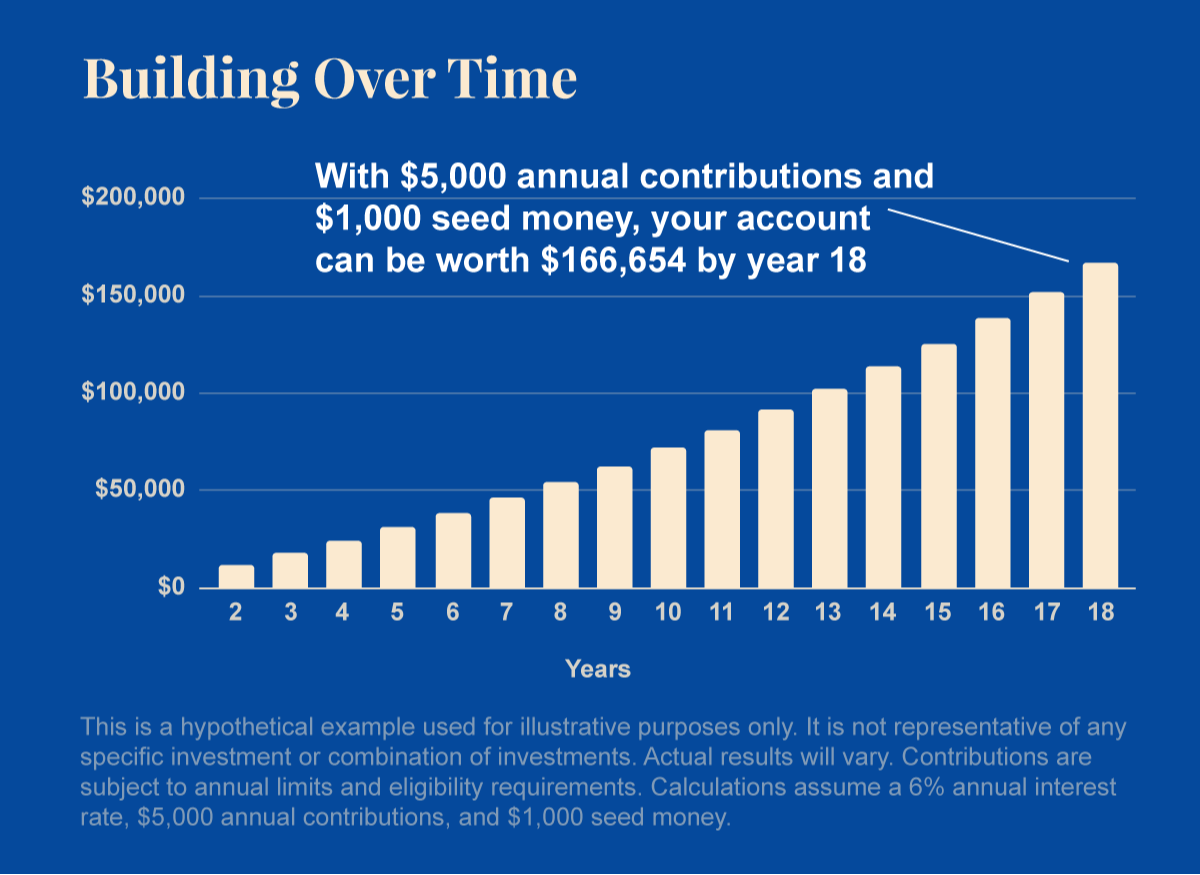
A new federally created savings account for children will become available in July 2026 under Section 530A of the Internal Revenue Code. While the account introduces new planning opportunities, it is best viewed as another tool in the savings toolbox rather than a replacement for existing strategies.¹ ⁴
Who Can Open One?
Any U.S. citizen under age 18 with a valid Social Security number can have a 530A account.¹
Children born between January 1, 2025, and December 31, 2028, may also qualify for a one-time $1,000 federal contribution if the required election is made.¹ ⁵
How Contributions Work
The account allows contributions from parents, grandparents, family members, and friends, subject to annual contribution limits. Employer contributions may also be permitted under the rules established for these accounts.⁴
Individual contributions are made with after-tax dollars, while government and employer contributions may receive different tax treatment upon withdrawal.⁴
Investment Rules
Assets must be invested in low-cost U.S. equity index funds or exchange-traded funds (ETFs). Investment choices are intentionally limited and generally do not include bonds, international stocks, or other asset classes.⁵
What Happens at Age 18?
At the end of the year the child turns 17, the account transitions to rules similar to a traditional IRA.⁵
Funds may be used for qualified education expenses, a first-time home purchase (subject to IRS limits), retirement, or other purposes. Depending on how withdrawals are used, taxes and penalties may apply.⁵
One important distinction from a 529 plan is that once the beneficiary gains control of the account, there is no requirement that funds be used for education.⁶
How Does It Compare to a 529 Plan?
If education funding is the primary objective, a 529 plan may continue to offer advantages because of its tax-free growth and tax-free withdrawals for qualified education expenses.⁶ The new 530A account may be worth considering as a supplemental savings tool; for most families, it should complement—not replace—a dedicated education savings strategy.
Also, the new 530A account may provide additional flexibility for families who want savings that are not tied exclusively to education goals.⁶
Key Considerations
Before opening an account, families may want to consider:
- Whether their child qualifies for the federal $1,000 contribution.¹ ⁵
- How the account fits alongside existing savings strategies.
- State tax treatment, which may differ from federal rules.⁶
- The fact that the beneficiary gains control of the account at age 18.⁵
Bottom Line
The new 530A account creates another savings option for children and grandchildren. For some families, particularly those eligible for the federal contribution, it may be worth exploring as part of a broader financial strategy. The right approach depends on your goals, tax considerations, and existing savings plan. Reach out to our team to see how this may fit into your financial roadmap.
Sources
- Investor.gov. Trump Accounts. April 2026.
- Business Wire. JPMorganChase to Match U.S. Government's $1,000 Contribution to Children's Accounts. January 29, 2026.
- Associated Press. December 2, 2025.
- IRS Notice 2025-68. December 2, 2025.
- Federal Register. Section 530A Regulations. March 9, 2026.
- PKF O'Connor Davies. Section 530A: What Families Need to Know. April 2026.
Disclosure: This article is for informational and educational purposes only and should not be construed as tax, legal, or investment advice. Rules governing Section 530A accounts remain subject to IRS guidance and future interpretation. Consult qualified tax, legal, or financial professionals regarding your specific circumstances.